
Living in the world of fast consumption, quick technological advancement, and growing environmental problems and challenges, waste management has become one of the burning questions of today. All of the products that we consume, such as the plastic bottle, some piece of wrapping paper, an electronic device, or a used garment eventually have a life cycle. The occurrence of what follows does not only define the future of that item but also the wellbeing of our planet. In this regard, the idea of Matarecycler is the idea that is created as a transformative concept.
It is not just a machine, a system, or a company but a philosophy that questions the conventional simplistic linear view of the journey of take, make, dispose. Rather, Matarecycler is a company that dreams of a circular future in which materials are recycled, reused, and renewed. It refers to the ability to loop back, save resources, and redefine the concept of waste.
The present blog post discusses Matarecycler as a vision, movement, and viable solution to living environmentally. We will explore its history, technology, social, environmental positive effects and how it can be used to build a green future. At the end, you will find out why Matarecycler is not merely a keyword, but a vision to be followed.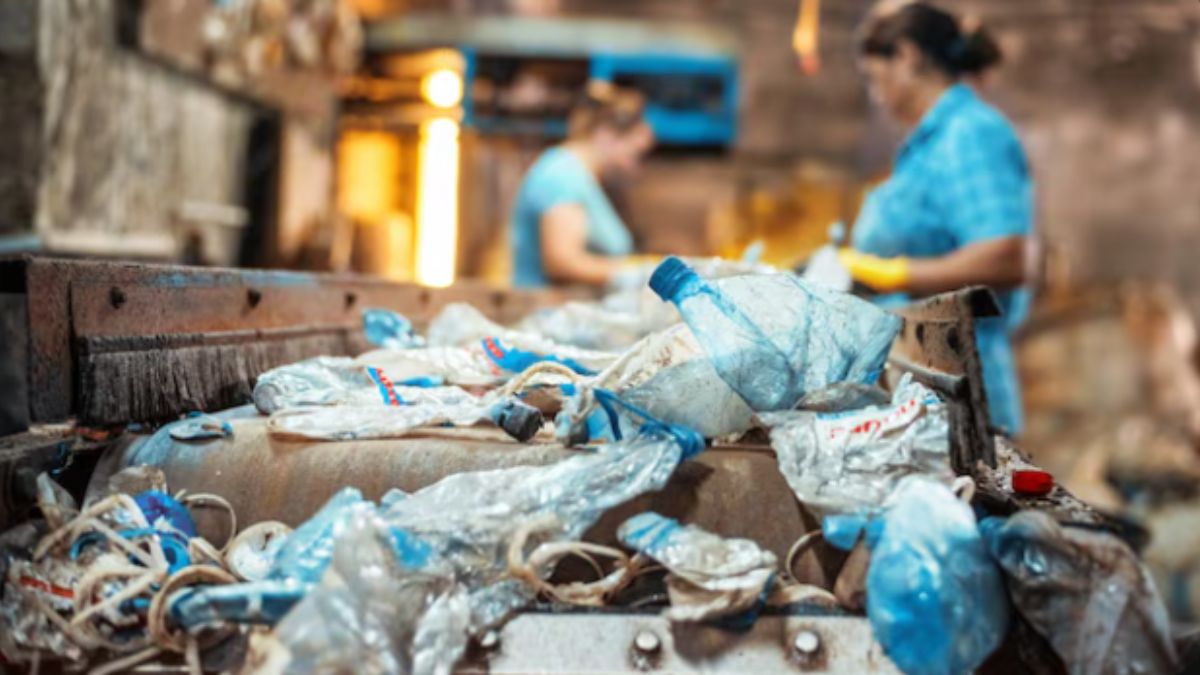
The Philosophy and Vision of Matarecycler.
Both powerful ideas are combined at the heart of Matarecycler: material and recycles. The term implies the system or attitude that aims at converting materials instead of throwing them away. Matarecycler is based on the philosophy according to which nothing is waste, just misplaced resources. The conventional waste management systems are usually concerned with disposal and containment. There are landfills, contaminated oceans and incinerators. To this Matarecycler responds by thinking of waste as a raw material waiting to be used again.
The philosophy is based on three pillars including recognition, regeneration and responsibility. Recognition entails the realization of real worth of materials. Regeneration is concerned with reusing and recycling of such materials. Responsibility places a call to individuals, communities as well as industries to engage in sustainable cycles.
The History of Recycling and the must have Innovation.
The process of recycling is not a new one. The use of metals and repurposing of tools were necessary in ancient civilizations. Nevertheless, industrialization in the modern form came with mass production, generating amounts of wastes never witnessed before. This was met with the development of recycling systems which are not very efficient and many are also narrow. The rate of recycling of plastics, e.g., remains distressingly low in most regions of the world. E-waste is increasing at a high rate due to the low product life cycles and continuous product upgrade.
Fast fashion trends have caused a high environmental burden of textile waste. The next evolution in this direction is Matarecycler. It also appreciates the fact that traditional recycling practices are insufficient. Innovation should view design flaws, complexity of materials, contamination and consumer behaviour. The future requires smarter systems, which would be able to identify, sort and process materials with increased efficiency and accuracy.
The Opportunity of Matarecycler to Turn Waste into Opportunity.
Matarecycler is all about transformations with the reality that it can convert the problems into opportunities. It does not consider discarded materials as liabilities but as assets. Consider the case of a system fitted with sophisticated sensors that can detect the material composition within seconds. Artificial intelligence algorithms are used to process information to find the best way to recycle the stuff. Robotic arms sort items that were not contaminated much thus enhancing recovery rates. The materials retrieved are in turn converted into raw materials that are used in producing new products in high quality.
Not only does such a system help minimize landfill waste but it also minimizes demand of virgin resources. It would translate to a lower level of deforestation, lower mining and lower green house gas emissions. Other than environmental advantages, Matarecycler generates economic prospects. Recycled material may be marketed or reused, or turned into some new products. The local communities can also set up micro-recycling centers thus creating job opportunities and enhancing sustainability.
The use of technology in Matarecycler Ecosystem.
The use of technology is at the core of the development of Matarecycler. The identification of the material and sorting are precise with the help of artificial intelligence, machine learning, and robotics. Internet of Things devices will be able to trace the waste flows and streamline the paths. The recycling chains can be provided with transparency by the blockchain technology that ensures that the materials are processed responsibly.
Complex plastics can be used in advanced chemical recycling methods to be reduced into their original monomers. Innovations in bioengineering processes use organic waste to produce biofuels or compost that have little impact on the environment. Matarecycler incorporates these technologies into a linked system. It does not see isolated solutions but interconnected networks that communicate, adapt and get better as time progresses. This technology assurance guarantees greater efficiency, reduction of operational expenses, as well as increased environmental impact.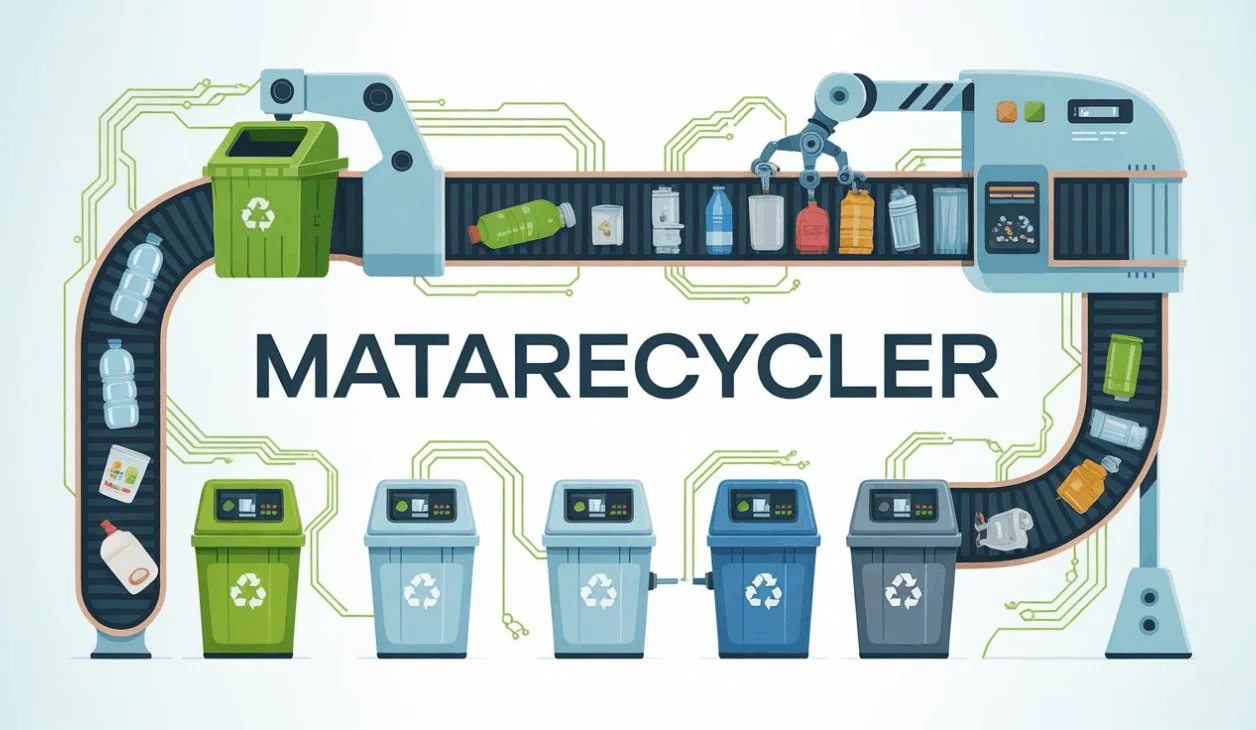
Environmental Effects and Climatic Benefits.
Matarecycler has far reaching environmental impact. It decreases the extraction of raw materials by maximizing the recovery of materials. Habitats and biodiversity are usually destroyed due to mining, logging, and drilling. The minimization of the demand of these activities safeguards ecosystems. Typically recycling uses less energy as compared to manufacturing products using pure materials. To illustrate, recycling of aluminum helps to conserve up to 95 percent of energy involved in extracting it out of bauxite ore. The overall climate benefits accrue to a large scale when these efficiencies are implemented on various materials.
Matarecycler also reduces landfill Methane emissions. When anaerobically decomposing organic waste, methane as a greenhouse gas that is several times stronger than carbon dioxide is released. This risk is mitigated by redistributing organic waste into compost or bio-energy plants. Matarecycler helps in achieving global climate and sustainable development objectives by contributing to the decrease in emissions and the number of resources used up.
The social and community implications are as follows.
The issue of sustainability is not just an environmental concern but also a social concern. Matarecycler helps to promote community and collective responsibility. The communities can be empowered by local recycling hubs to own the waste management systems. Residents can be taught through educational programs on how to sort materials. Programs that engage young people may motivate the new generation of environmentalists.
Informal waste pickers are important in the recycling process in most developing regions. It is possible to formalize and support their efforts through matarecycler systems and offer them safer working conditions, fair wages, and protection equipment. Matarecycler programs are community-based and they bring about social cohesion. Individuals come together to uphold one cause which promotes teamwork and group pride.
Matarecycler and the Circular Economy.
The circular economy is a system that aims at removing wastage and ensuring that resources are utilized as long as possible. Matarecycler can be easily integrated in this framework. Matarecycler systems can easily process products which are meant to be disassembled. The manufacturers are able to introduce closed production cycles whereby used materials are reused in other products.
This will decrease the reliance on non-renewable resources and normalize supply chains. It also promotes product design innovations, material science and business models. Matarecycler is a significant element of infrastructure in the circular economy, a solution between consumption and regeneration.
Difficulties and obstacles to Implementation.
Matarecycler has got its challenges in spite of its promise. The costs of infrastructure may be high particularly in areas that do not have waste management systems. Success will require change in behavior and public awareness. Poisoned waste streams lower productivity and cost of process. Innovation should have policy frameworks encouraging it. Governments are essential in the provision of incentives, setting of recycling targets and enforcing regulations. The mass adoption can be gradual without favorable legislation.
Also, there is a complexity in global supply chains. To make sure that recycled materials are of the required quality, it is necessary to make sure that quality control and monitoring are observed. These barriers need to be dealt with through the efforts of governments, industries, communities and innovators.
The Future Vision of Matarecycler.
In the future, Matarecycler can be turned into one of the building blocks of the sustainable infrastructure globally. Think about the cities where garbage cans scan and classify the items. Smart trucks give optimum collection routes in regard to real-time data. Processing centers are highly efficient and have very little human workforce. The recycled materials are easily channeled back to manufacturing plants and the cycle is repeated.
Schools might also introduce the principles of Matarecycler in the curriculum in order to establish a culture of sustainability at a young age. The companies would be allowed to boast of transparency reports of their recycling efforts. Waste would not in such future represent neglect, but a chance.
Frequently Asked Questions
What is Matarecycler all about?
Matarecycler is a conceptual model and novel solution to recycling that focuses on the latest technology use, the ideas of the circular economy, and the involvement of the community in order to turn waste into a re-use.
Are there any specific machines or other systems involved in Matarecycler?
It can represent both. It can be used to refer to high-tech recycling equipment using AI and robotics, or it can be used to denote an all-purpose ecosystem comprising of technology, policy, and community engagement.
What is the difference between Matarecycler and the conventional recycling?
Conventional recycling is usually manual and has a poor processing ability. Matarecycler involves the use of improved technologies, efficiency, and closed-loop systems to make maximum use of the material and reduce the waste.
Is it possible to implement Matarecycler in developing countries?
Yes. Matarecycler systems can be localized with the right kind of investments, training, as well as policy response. It can be implemented more easily and cheaply by community-based models.
What are the materials that Matarecycler can process?
It can handle plastics, metals, paper, glass, electronic waste and organic materials depending on the technology employed. Its capabilities are further enhanced by use of advanced chemical and biological techniques.
What can be done to improve the Matarecycler vision?
People will be able to engage in good waste management, use less, choose sustainable brands, promote environmentally sound policies, and be involved in local recycling programs.
Conclusion
Matarecycler is the radical reinvention of the nature of our interaction with materials, waste management. In the world where the problems of the environment become more complicated day by day, partial changes are not enough any longer. We must have radical systems that remake the lifecycle of products and make regeneration more important than disposal. Through innovation and combination of high-tech solutions, principles of a circular economy, and community, Matarecycler provides the way to a more resilient and cleaner future.
It makes us think of waste as a start, not a goal, a point of departure of innovations, accountability, and new things. The process of sustainability has to be a shared process. Governments need to implement favorable policies. Companies should embrace the concept of responsibility. The communities need to be active. And men should consciously decide on a daily basis. Matarecycler is not just an idea, but it is a call of action. It makes us reconsider, redesign and restructure our relation with the material world.
When adopted on large scale level, it may transform the industries, give strength to the communities and secure the planet to the future generations. The way the future will unfold is not predetermined. It is built up by our present choices. When we decide to regenerate, rather than waste, to become responsible, rather than remain unaware we move nearer to the world Matarecycler has pictured, a world with nothing thrown away, and everything valued once again.
About the Writer
The author of this article is a sustainability enthusiast and content creation research whose interests include environmental innovation and responsible living. Having years of experience in the research of green technologies, the models of the circular economy, and eco-friendly entrepreneurship, the author is sure that well-informed people could promote the significant change.
By engaging in broad reading, reviewing the trend in the industry and also by observing the actual sustainability practice in the real world, the author seeks to narrow the disparity between the highly complex environmental systems and the commonplace comprehension. The aim is straightforward: to provide readers with the knowledge that will make them act.


