
In the clothing construction and sewing industry, seams are the unseen structure of holding fabric pieces and forming clothing into the wearable structures. Although most individuals might concentrate on the fabric used, choices of patterns or decorations, the quality and the type of seams applied on the garment is usually the determinant of how durable, comfortable and professional a given garment may be upon completion. The German word Nahttypen is the word that describes the variety of seams in sewing and textile production. Such types of seams are required in fashion design, as well as in upholstery, industrial textiles, tailoring, and home decorations.
Knowing Nahttypen is essential to those who are interested in sewing, be it in their early years as they master the art of stitching simple clothes or in the profession of designing elaborate allows a designer to create a couture. The various types of seams are used to serve a purpose. Others are intended to reinforce clothes that are subjected to heavy wear and tear whereas others provide clean finishes that do not allow fraying. The seams are selected in their aesthetic use, which brings visible details into clothing, whereas others are concealed to achieve a smooth and graceful appearance.
Seam technique has also changed through the evolution of the textile technology. In the early days, there were simple stitches and hand sewing of clothes and nowadays sewing machines and other specialized tools can be used to sew different types of seams with great ease and speed. Currently, designers make thoughtful choices of the seam methods, depending on the fabric, clothing type, wearability and the overall design idea.
This is an all round guide to the concept of “Nahttypen,” their significance, usage, and utilisation in the contemporary sewing. It discusses the effect of the various types of seams on the garment structure, look, and longevity as well as it sheds light on the reasoning and when different types of seams are applied. You are a hobbyist, a fashion student, a tailor, or a textile enthusiast: by learning about the types of seams, you will be able to better appreciate the process of garments construction and become a better sewer.
The Seam Making in the Garment Construction.
Every garment has its basis over seams. Individual pieces of fabrics could not be used to create clothing without them. The main idea of seams is to join two or more pieces of fabric, and the purposes of seams are far more than just the simple joining. Structural integrity is through the use of seams. They make sure that clothing can resist the daily wearing and movement without disintegrating. The right seam can be used to support stress points like shoulders, waist lines and side seams, whereas the wrong one can be used to cut a garment in half.
The other useful purpose of seams is shaping. Designers are able to work out curves and contours in placing strategies on the seam so that clothes could be fitted into the body of a person in a comfortable manner. Shaping techniques that are based on the construction of seams include princess seams, darts, and panel seams. Seams are also used in the visual appearance of clothes. Ornamental seams may be used to increase the visual appeal of a garment, provide texture, dimension, or contrast. In current fashion, the seams that are visible are fashioned as a stylistic element instead of being concealed structural elements.
Lastly, pleasure is the issue of seams. The placement of seams and the way they are finished can make a dress either comfortable against the skin or make the garment irritable. As an illustration, flat seams are normally applied in sportswear in order to reduce friction.
Evolution of Nahttypen in the History of Sewing.
The idea of types of seams has been millennia old. The first clothing in human civilization consisted of the skins of animals that were stitched together with bone needles and sinew thread. These early seams were not very sophisticated although they worked well to keep off the harsh weather. With the evolution of civilized societies in textile production, sewing evolved to higher levels. More sophisticated stitching techniques were made available to the ancient cultures like the Egyptians, Greeks, and the Romans who then used their knowledge to make clothes out of the woven fabrics. The seams were also done by hand in order to make it durable and presentable.
The Industrial Revolution introduced a lot of improvements in the technology of sewing. Garment production was transformed in the nineteenth century with the invention of the sewing machine. Mass-produced clothing was now made possible since machine stitching enabled stronger, faster and more consistent seams. Seam types have kept on evolving in the twentieth and twenty-first century. Contemporary clothes have special seam methods that are made with purpose and fabric. Performance fabrics, synthetic fabrics and stretch fabrics have to be constructed in their seams using elastic and durable seams. In the modern day, the study of Nahttypen is a crucial issue in the education of the fashion designers to be able to know how the way a seam is constructed influences the quality of the garment.
Basic Seam Types in Sewing
The plain seam is one of the essential types of seams in a sewing industry. This seam is achieved by stitching two pieces of fabric by positioning them together and stitching along the edge. It is very popular in clothing production due to its flexibility and ease. Most of the variations of seams are based on the plain seam. It is also suitable when it is modified with various seam finishes to avoid fraying leading to durability. The plain seam is one of the most popular seam types used in fashion industry even though it is an easy one.
The other type of seam is the reinforced seam. To reinforce high stress areas, this seam has extra stitching. Workwear, denim clothing and heavy-weight clothing are known to use reinforced seams. One type of the plain seam is the double-stitched seam where there are two rows of stitches that run parallel to each other. This is a seam that is usually found in jeans and other clothing that requires additional durability.
The French Seam
The French seam has a Clean finish which is known to be elegant. The French seam closes the raw edges inside the seam unlike simple seams that expose the edges of the fabric. This gives a nice and professional look on the interior and exterior of the garment. Lightweight and delicate materials like silk, chiffon and organza are commonly sewn in French seams. These materials easily get torn, and wrapping the edges will avoid being torn as time goes by.
The construction of the pieces is done by sewing the pieces of fabrics twice. The initial seam is cut with wrong sides of the material side by side. The right sides are again stitched up after the trimming and pressing with the right sides together where the raw ends are enclosed. This type of seam is especially common in the high-end clothing and couture sewing, due to the elegant finish.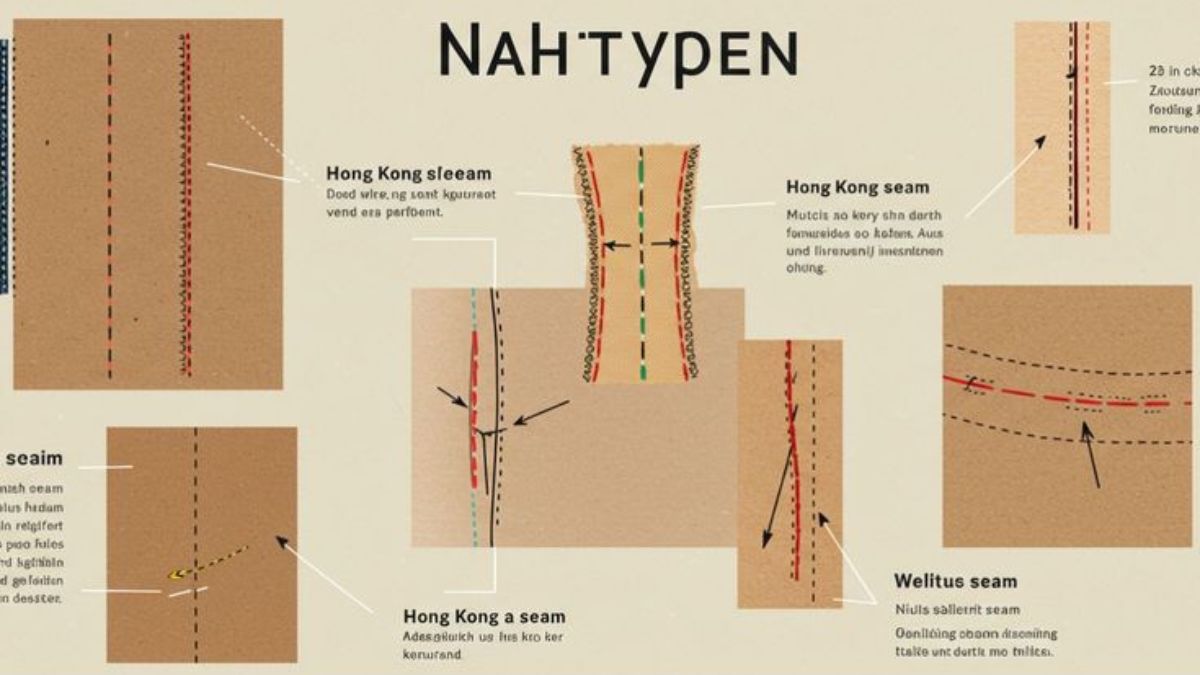
The Flat-Felled Seam
Flat-felled seam has been known to be very strong and durable. This seam is very frequent in denim jeans, working clothes, and sports clothes since it provides a powerful connection between layers of clothing. In this type of seam, one of the seam allowances is bent and stitched onto the other. This wraps the uncouth edges and forms a perpendicular and stable seam that is resistant to fraying.
Flat-felled seams are not only durable, but also very striking to look at. The two rows of visible stitches are frequently utilized to create a design feature in the clothing of jeans and casual shirts. This type of seam is best used on the garments that are often washed and heavily worn out.
The Bound Seam
Bound seam refers to the process whereby raw edges are wrapped in an addition of a strip of fabric or binding tape. It is a decorative finish and is composed of seam finish that is durable. The unlined jackets, coats and clothes on which one can see the interior construction are usually bound with seams. Designers use a polished and professional interior finish by covering raw edges with binding. The type of seam is also commonly applied in quilting and craft sewing. The binding will be selected in contrasting color or design in order to give the garment a more design.
The Lapped Seam
Lapped seam is formed by pressing two pieces of fabric and sewing them. This type of seam is commonly applied to leatherwork, outer piece, and heavy materials whereby conventional seams might cause the fabrics to bulge. Lapped seams offer strength and have a low profile. They are also commonly used in rain-coats, furniture and industry fabric.
Due to the fact that the fabric pieces do not meet each other at the edges but instead they overlap, this type of seam may produce some distinct design effects. More often, designers apply contrasting threads or decorative stitching to emphasize on the seam.
Decorative Seam Types
Seams can be not necessarily concealed parts of clothing construction. Most contemporary designs are purposely left uncovered with the seams being employed as decorative elements. Ornamental stitches can be either topstitched, embroidered or a contrast thread. Such methods enable the designers to provide visual interest, but preserve the structural role of the seam.
Denim and other casual clothes, especially have topstitched seams. The stitching is visible, which gives the garment a bold and stylish appearance and gives the seam added strength. The other style of ornamental seam is the piping or corded seam. The seams consist of a threaded cord that is covered in a piece of material and stitched into the seam line and this forms a decorative raised edge.
Types of Seams of Stretch Fabrics.
Stretch fabrics demand the use of specialized seam methods as a normal seam can fracture once the material is stretched. The construction of the seams with the help of elastic materials is a necessity in the garments created of knit materials. Another type of seam that is usually employed during the manufacture of stretch material is the overlock seam. This is a seam that is formed with the help of a serger machine which also stitching and trimming the edge of a fabric at the same time.
In overlock seams, the garments will be able to stretch without broken thread. They find a lot of application in T-shirts, legging, sports, and undergarments. The coverstitch seam is another seam that is applied in stretch fabrics. This seam gives an outer row of parallel rows of stitching and an inner ringed row of stitching, which gives the seam more flexibility and durability.
Seam Finishing Techniques
Seam finishes involve means of avoiding fabric edges fraying. Although technically they are not two different types of seams, these methods are related to the construction of seams closely. Typical finishes on seams are zigzag finishing, pinked edges and serging. Both techniques assist in securing the edges of the fabrics and increase the wearability of clothes. The selection of the seam finish will be determined by the type of fabric, type of garment and the degree of durability one wants.
The Significance of Selecting the appropriate Nahttypen.
The choice of the seam is a critical process in the designing of garments. The incorrect stitch might result in the damage of the fabric, uncomfortable clothes, or their structural collapse. When selecting types of seams, designers have to pay attention to a variety of factors. These are weight of fabrics, stretch abilities, functionality of garments and beauty objectives.
As an illustration, fine fabrics need seams that would be as flat as possible and without being frayed. The heavy fabrics have heavy seams that can withstand weight and tension. The knowledge of Nahttypen enables the designer to make good choices that improve the quality of the garments and their durability.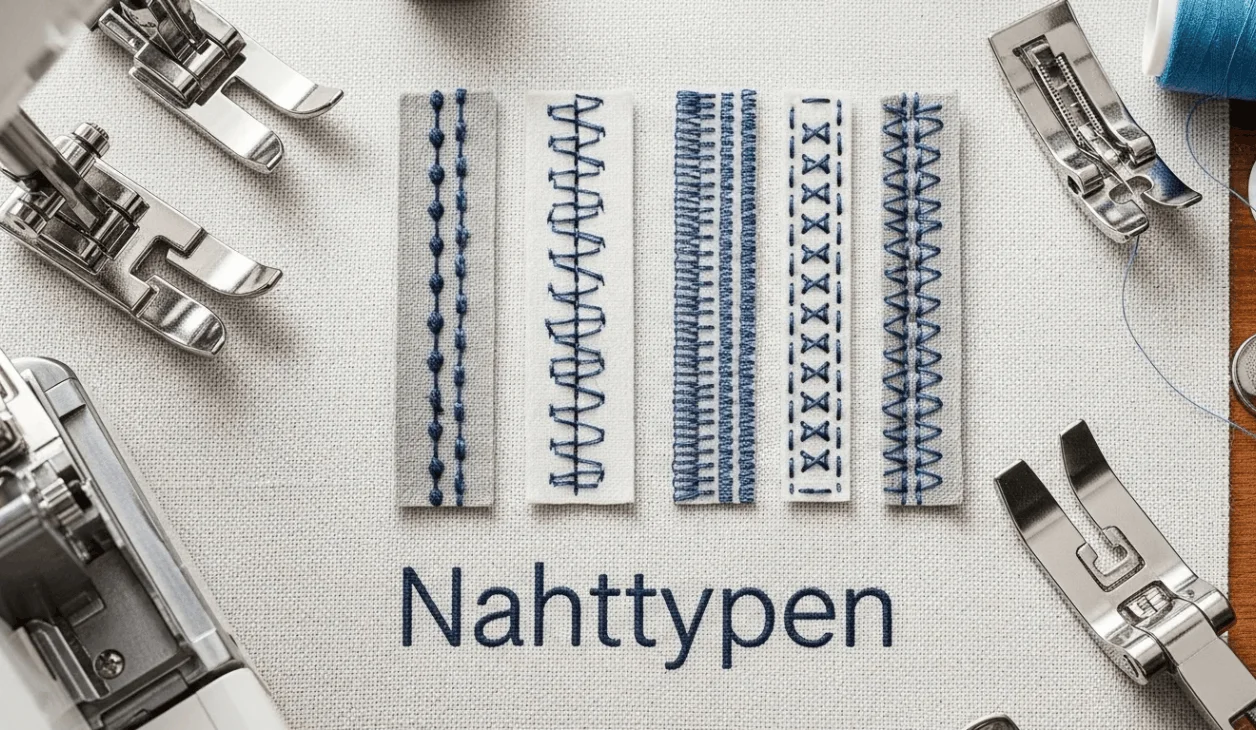
Frequently Asked Questions (FAQs).
What does “Nahttypen” mean?
Nahttypen is a German word which in English means type of seam. It means the different techniques of joining the pieces of cloths in sewing and garment making.
What is the significance of the seam types in the sewing?
The type of seam is one of the factors that defines the strength, durability, and the look of a garment. The right seam makes clothing durable as well as have a professional appearance.
Which kind of seam is the one that is strongest?
The flat-felled seam is termed as one of the strongest seams. It is mostly applied in jeans and working wear as this gives it great durability.
What is the best seam to use on delicate endowments?
French seams are suitable to very delicate fabrics like silk and chiffon. They conceal the unfinished edges and do not fray, at the same time keeping a clean look.
Do ornamental seams serve a purpose?
Indeed, ornamental seams may be functional as well as decorative. Garments have many decorative seams that enhance their strength, as well as provide visual appeal.
Are stretch garments special seam wise?
Yes, stretch fabrics need flexible seams, e.g. overlock or cover stitch seams, so that the garment can stretch without straining the thread.
Conclusion
The art and science of sewing depends on the concept of Nahttypen. Seams are not only technicalities concealed in clothes, but they constitute fundamental components that dictate the appearance, fit of clothes and their functionality. Beginning with the plain seams, to more specialized methods such as French seams and flat-felled seams, all types of seams have a special place of use in the construction of a garment. The knowledge about seam types enables the designers, tailors, and sewing enthusiasts to produce durable and beautiful clothes. Seam can determine the comfort and flexibility to the visual style and the life cycle.
With the ever-changing technology in the textile industry, more seam methods, as well as sewing methods, are expected to be developed. Nevertheless, the defining principles of seam construction will be still primary to the art of sewing. To anyone who is interested in fashion, tailoring or textile arts, it is significant to learn about Nahttypen to be well on the way of mastering the art of garment construction. Seam techniques can make simple sequences of cloth into a well-designed and nice cloth that will be timeless with practice and knowledge.
About the Writer
It is the author of this paper, who is an enthusiastic researcher and topic content producer in the field of textiles, fashion design, and sewing methods. Having an intense interest in clothing assembly and the history of the textile industry, the author wants to ensure that complicated sewing concepts are known to the audience of any expertise.
The writer provides comprehensive instructions and learning articles that enable the novice to learn the very basics of sewing besides giving important information to the professional designers and tailors. Integrating studies and applied experience, the author attempts to expand the love towards the art of creating clothes and supporting the idea that it is not a simple task.